
FYI WILLOUGHBY: July 6, SR 84 will be closed between Shankland Rd and River Rd for approx. 8 weeks for slope stabilization and retaining wall work. Detours will be posted.
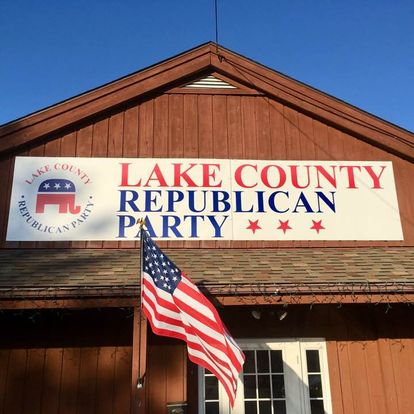
The Lake County, Ohio Republican Party is led by dedicated volunteers and members of the Lake County Republican Central Committee. Our volunteers and committee members are the crucial mechanism to administer the Republican message at the grassroots level from the City of Mentor to North Perry Village, from Lake Erie to the Kirtland Temple, from Squires Castle to Grand River wine country. Our party represents people from every possible background and from every community in Lake County working together to get out the vote and elect Republicans to all township, municipal, county, state and federal elected office serving the people of Lake County, Ohio!
The United States operates as a constitutional republic, a form of government that involves representatives elected by the people, who execute their duties under the constraints of a prevailing constitution that specifies the powers and limits of government.
One fundamental principle of a constitutional republic is the protection of minority rights against the potential tyranny of the majority. This design counters direct democracy, where majority rules could potentially ride roughshod over minority interests. The U.S. Constitution outlines various checks and balances intended to prevent any single branch of government from gaining absolute power, thereby protecting individual rights from being infringed upon by majority vote.
Another key element of this governance style is the separation of powers among branches of the government, a system meant to foster a balance of power. The legislative branch makes laws, the executive branch enforces these laws, and the judiciary interprets them. Each branch operates independently from the others to prevent any accumulation of power, adhering to the principles laid out by the framers of the Constitution.
The electoral process distinctly forms the basis of the U.S. as a republic. Citizens do not vote directly for laws and policies but instead elect representatives who make these decisions on their behalf. This filter theoretically places an informed decision-making body between the populace’s desire and the law, which aligns with the characteristics of a republic.
The rule of law also serves as a cornerstone in a constitutional republic. Unlike monarchies of the past where rulers were law unto themselves, in a constitutional republic such as the U.S., every citizen, irrespective of their status or authority, is subject to the law. This adherence to codified laws confirms the U.S.’ attachment to the abstract principles of democracy and to a rational legal framework that governs society’s functioning.
The continuous impact of these foundational elements helps ensure the function of the U.S. governance is not driven by transient popular sentiments but steered through established, systematic laws and practices. This tempers swaying populist whims and meshes well with democratic ideals—where every voice has a chance to be heard through elected representation. Herein lies the synthesis of republican principles with democratic values, helping shape policies that reflect both collective will and measured, constitutional guidelines.